
About Us
JET Formwork IBS Sdn. Bhd.
JET Formwork IBS is a specialist and manufacturer of system plastic formworks with extensive experience and resources in engineering, design, project management and supervision. We provide one-stop, innovative, cost-effective solutions that improve job site safety, increase worker productivity, and promote sustainability.
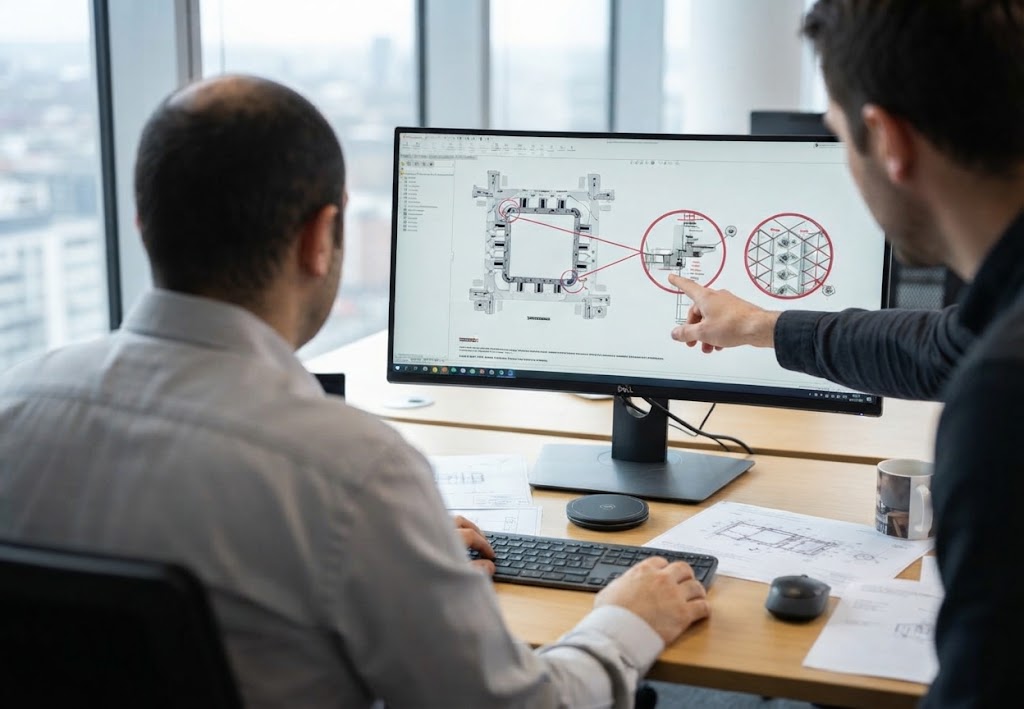
Quality & sustained R&D spending.
Our sustained R&D investments in material sourcing, our unrelenting quality standards, and the drive of our people to design, engineer, and craft products that surpass existing performance standards and client expectations are the reasons why JET is the first choice of savvy contractors.

Lower carbon footprint.
JET believes that lowering the carbon footprint of every construction project is a goal just as important as raising productivity. Our system was designed to reduce construction site waste and the need to haul and dispose of it.
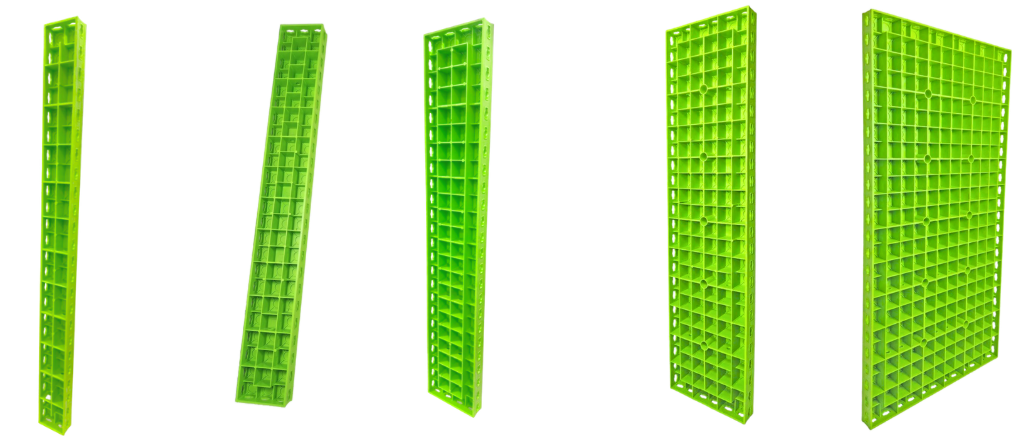
Sustainability is built into every product
All PLASFORM panels are made of ultra-durable polypropylene. After their service life, they can be recycled into plastic utensils and new PLASFORM panels. Steel components are recyclable into steel stiffeners. PLASFORM systems shorten construction timetables which leads to less energy use.
REDUCE, REUSE, RECYCLE
Green Construction focuses on reducing waste and minimizing environmental impact throughout a project’s lifecycle—from design and material selection to construction and waste management. Driven by the 3Rs, it prioritizes reduction above all. Although green materials can carry a higher upfront cost, their long-term economic, environmental, and health benefits far outweigh the initial investment.The Malaysian construction industry has relentlessly been pushing builders to build greener through the introduction of the Green Building Index (GBI) in May 2009. One of the small but important components of construction which fits the Green 3R’s concept is the implementation of Formwork System.
REDUCE. Modular construction using PLASFORM system formworks reduces the amount of formwork that has to be transported to, stored at, and used in the building site.
REUSE. PLASFORM panels are highly durable and good for 100 uses; with proper handling and maintenance, builders have been able to get up to 200 uses out of their panels. The usual plywood formworks are good for only 4 uses; after that, they become waste and landfill.
RECYCLE. After their useful lifespan, PLASFORM panels can be recycled into plastic formsheets and plastic utensils. PLASFORM panels never find their way into landfill.

PLASFORM system formworks are easy to use, make the construction process more efficient, and reduce the number of laborers required at the job site. The lower workforce requirement not only reduces the overall project cost but also lessens direct pollution, waste, and rubbish generation from workers.

Minimize degradation of environment
When you use PLASFORM instead of traditional plywood for concrete forming, you minimize the harvesting of trees, wild or planted, that are necessary for the production of plywood. This prevents the negative environmental impact when a tree with its CO2 absorption capacity is harvested. Figures from the State Forestry Administration of Malaysia show that when a tree grows to 1.0 cu.m, it can absorb around 1.83 mT of CO2.
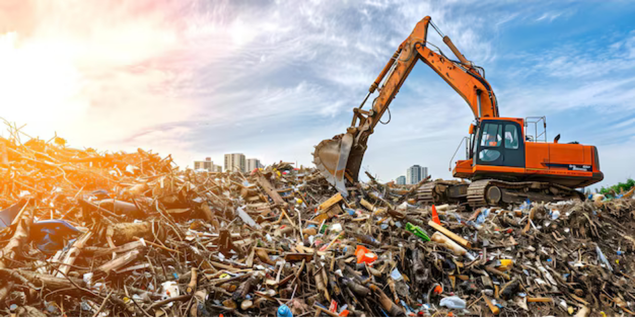
Reduce deforestation
The current annual production of PLASFORM panels is 240,000 sq.m with an average lifespan of 100 reuses and is equivalent to 43,200 metric tons of Plywood. Using an RWE factor of 2.3, this is equivalent to 99,360 metric tons (43,200mT x 2.3) of wood or 993,000 trees annually, required for 43,200 mT of plywood production. (RWE volume is a measure of the volume of logs or roundwood used in the manufacture of wood-based products like plywood, wood pulp, paper, wooden furniture, and joinery.)

Reduce land usage
Based on a benchmark of 3mT of wood (i.e 30 x 7-year tree) planted on 0.02 hectares of land, 662 hectares (or 1640 acres) of land are required to produce 43,200mT of plywood annually. For a continuous supply of the raw wood required to produce 43,200 mT of plywood annually, you will need 7 x 662 hectare (or 11,500 acres) of land for tree-planting. This vast amount of land could otherwise be reserved for socio-beneficial use such as sustainable development of agriculture.
Reduce embodied energy
Embodied energy is the energy consumed by all of the processes associated with the production of a building, from the mining and processing of natural resources to manufacturing, transport and product delivery. The lower the embodied energy of a structure, the better the Green Building Index. Calculations show the embodied energy in Plasform is over 200% lower than plywood. See Table 1 below.
Table 1: Comparison of embodied energy between Plasform and plywood equivalent (Based on annual production capacity of 240,000 sq.m of Plasform and 100 times re-uses)
| PLASFORM PANEL | PLYWOOD Equivalent | |
| No. of re-uses | 100 (Conservative figure) | 5 |
| Embodied carbon, EC (1) | 3.90 kg CO2/kg | 0.81 kg CO2/kg |
| Embodied energy, EE (1) | 115.0 MJ/kg(3) | 15.0 MJ/kg |
| Quantity of product (sq.m) | 240,000 (Annual Production) | 4,800,000 (or 57,600 cu.m) |
| Component weight (kg) | 2,544,000 | 43,200,000 |
| Total embodied energy, EE | 292,560 GJ (81,300 MWh) |
648,000 GJ (180,000 MWh) |
| Barrel of oil equivalent, BOE (2) | 47,960 (7,626,000 litres) |
106,230 (16,900,000 litres) |
| Comparison ratio | 1.00 | 2.21 |
| Total embodied carbon, EC | 9,922 tons | 35,000 tons |
| Comparison ratio | 1.00 | 3.52 |
Notes:
(1) EE and EC of material is extracted from Inventory of Carbon and Energy (ICE), produced by University of Bath, UK
(2) Based on figures defined from US Internal Revenue Services
(3) EE for Plasform Panel has taken into account the injection moulding process. EE for pure PP is approximately 65MJ/kg, figures extracted from “Cradle-to-Gate Life Cycle Inventory of Nine Resins and Two Polyurethane Precursors”, The Plastic Division of The American Chemistry Council, by Franklin Associates, A Division of Eastern
Research Group, INC.
Reduced energy commitment
JET intends to reduce the amount of energy required to produce PLASFORM panels by 35% with the implementation of an Energy Management system and more energy-efficient injection moulding processes. The industry average for PP injection moulding: 1kg of PP = 50MJ (~13.9kWh) of energy (From Note 3, Comparison Table) Our annual production capacity is 2540 mT = 2,540,000x50MJx0.65 = 83,000 GJ (or 23,000,000 kWh). This power consumption can be measured from TNB quarterly and yearly billings to measure the performance.
PLASFORM System Sustainable Building

Suitable for rural projects.
Simplicity in formwork assembly and installation is ideal for areas where skilled labor is scarce.

DIY (Do it Yourself) System
PLASFORM was developed as a DIY (Do It Yourself) system using engineered plastic form-liner to replace plywood or metal form-liners.

FULL (Gangset) System
The modular PLASFORM panel is easy to assemble and dismantle and can be used in conjunction with contractors’ own equipment, further reducing end-user costs.

Planning, Engineering, Design & Technical Capability
JET’s technical advisers strive to be the best partners of design-and-build contractors. They’re capable of providing overall formwork and temporary works planning, supply services, and ease-for-buildability designs which can reduce construction time with a more efficient
implementation of system formwork & falsework under IBS. PLASFORM System adopts the policy of continuous improvement, and with in-house R&D, is continually improving its system formwork technology to meet the
demands of modern construction.

Adequate Manufacturing Facility and Capacity.
JET has plans to increase its current monthly capacity of 10,000 sq.m of PLASFORM panel production to 20,000 sq.m, to meet the demands of both the Malaysian and export markets. For perspective, 10,000 square meters of PLASFORM can form 2,400,000 sq.m of concrete annually, equivalent to 200 blocks of 10-storey medium-cost apartments. The adoption of ISO 9001:2008 Quality management ensures customers the highest quality for their projects.

Nationwide Distribution Network.
PLASFORM has been and will continually be engaging business partners throughout Malaysia to establish local presence in all states including East Malaysia. PLASFORM has currently tied up with various building material trading firms to tap their existing marketing infrastructure and serve contractors better.

Formwork System and Falsework Workshop.
JET intends to set up training workshops in collaboration with CIDB to promote, enhance and maintain long-term skills of formwork system operators. By imparting construction knowledge and skills to the Malaysian workforce, JET like to helps elevate incomes, drive the economy forward, and reduce dependency on unskilled foreign labor.


Recognized by leading industry bodies—including the Construction Industry Development Board (CIDB), Made in Malaysia, and Sedex— PLASFORM is an essential solution for developers seeking to elevate their Green Building Index (GBI) ratings.
-
Waste & Transportation Reduction: Traditional plywood formwork is discarded after just 4 uses, generating massive site waste. In contrast, PLASFORM System last for at least 200 uses with proper maintenance. This drastically cuts material waste and reduces transportation requirements, lowering site haulage emissions.
-
Material Circularity: Unlike spent plywood that accumulates in landfills, end-of-life PLASFORM panels are crushed and repurposed into durable plastic products like furniture and utensils. JET’s engineers are currently refining recycling processes to turn end-of-life panels directly back into high-durability formwork.
-
Enhanced Asset Value: Sustainable building yields direct financial returns. According to Dodge Data & Analytics, green buildings command up to a 7% higher asset value compared to conventional structures.


JET Formwork has a solid track record of successfully executed projects all over Asia and the Middle East. From its home base in Malaysia to the Philippines, Indonesia, India, Myanmar, Vietnam, Singapore, Bahrain, and Abu Dhabi, Jet Formwork has consistently provided its clients with solutions that save time, increase productivity, and advance the cause of sustainability.